Showing posts with label Inclusion. Show all posts
Showing posts with label Inclusion. Show all posts
19 November 2012
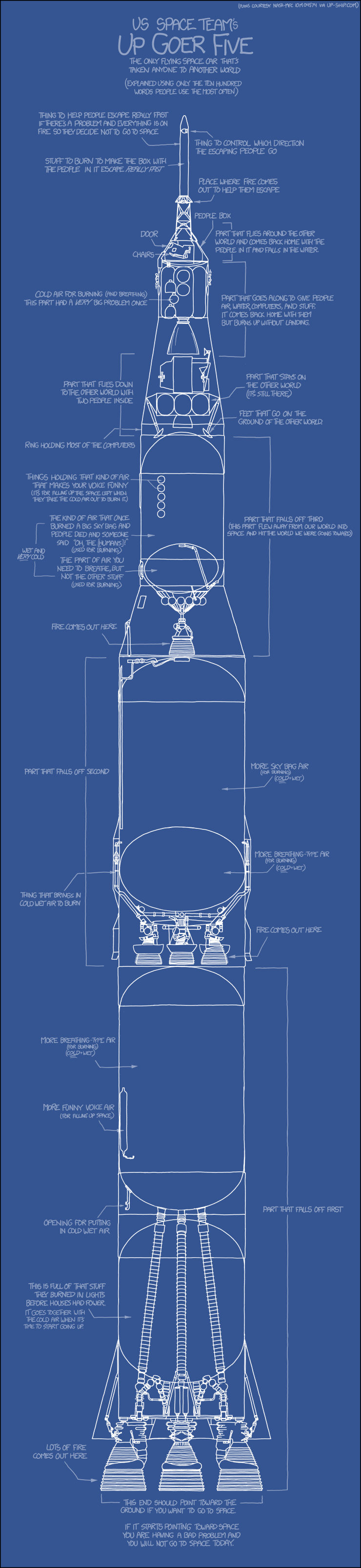
Rockets (and other things) made simple

04 January 2012
Designing for developing communities
Fastco debates the ethics of user research in developing communities, to help global companies target their products. The discussion is sparked by Jan Chipchase, once a researcher at Nokia, now at Frog, who has made a career of reaching otherwise unresearched locations and whom I suspect may have been in Don Norman's mind when he wrote critically of the relevance of user research 'you get to go to exotic locations, to watch people do intimate acts, and then to come back and tell the world what you have seen.'
I understand Norman's tetchniness; I understand Chipchase's critics who question the use of his research to create artificial need for global products; the communication of some global research projects has made me wonder 'for whose benefit' in the past. But the alternative of imposing unresearched products and services on developing communities seems even less acceptable. As Chipchase points out 'the poor can least afford poor products'. Fastco describes the development of the Firefly infant phototherapy unit, developed by Design That Matters for use in Vietnam, and I'm reminded of the incubator developed by Stanford's d.school, neither of which would have been developed in their current form without research in the context in which they are to be used.
I understand Norman's tetchniness; I understand Chipchase's critics who question the use of his research to create artificial need for global products; the communication of some global research projects has made me wonder 'for whose benefit' in the past. But the alternative of imposing unresearched products and services on developing communities seems even less acceptable. As Chipchase points out 'the poor can least afford poor products'. Fastco describes the development of the Firefly infant phototherapy unit, developed by Design That Matters for use in Vietnam, and I'm reminded of the incubator developed by Stanford's d.school, neither of which would have been developed in their current form without research in the context in which they are to be used.
09 October 2011
iMuse launch

From yesterday's tea party at the Museum of English Rural Life, to launch iMuse, a collaboration between the museum and the charity AACT (Access Ability Communications Technology) to make museums accessible.
In the picture, an attendee is shown how to use QR codes to find out more about the museum's exhibits.
02 July 2010
The perils of voice input
Having worked on a voice input study recently, I cannot resist this.
Interestingly Wordpress is now supporting posting voice clips via phone. According to Mashable, LiveJournal has supported similar function for years. Would be interesting to know what uptake is.
[Bournistoun clip via Olly Bayley]
28 April 2010
Review of web accessibility tools
Kindly put together by Angela Colter (with her caveat: 'Your first choice should be to have people with disabilities test your website to ensure that it’s accessible.'). A useful resource.
04 April 2010
Alan Siegel on prioritising simplicity
 TED Talk by Alan Siegel, showing simplified credit agreements (above) and tax forms. Nice use of heat maps for before and afters.
Via DesignLessBetter
Thumbs down for iPad
Several people are finding it hard to be excited by the iPad. Their verdict, in summary: an over-grown iPhone, with less functionality and connectivity than its smaller sibling, that locks users into consumption (of Apple-approved apps) rather than supporting creation.
Aaron Swartz and Cory Doctorow both rail against the boundaries of Apple's walled garden (which, Tim Bray has described as Disneyfied). Jeff Jarvis is modifying his initial enthusiasm. And this, by Quinn Norton, on the lack of impact of hyped technology on poor people, is salutary.
Incidentally iPad's backlit LCD display, while ideal for video and games, is, apparently, no match for Kindle.
[Quinn Norton and Tim Bray links via John Naughton]
Aaron Swartz and Cory Doctorow both rail against the boundaries of Apple's walled garden (which, Tim Bray has described as Disneyfied). Jeff Jarvis is modifying his initial enthusiasm. And this, by Quinn Norton, on the lack of impact of hyped technology on poor people, is salutary.
Incidentally iPad's backlit LCD display, while ideal for video and games, is, apparently, no match for Kindle.
[Quinn Norton and Tim Bray links via John Naughton]
21 January 2010
Younger and older extremes of media consumption
Kaiser Family Foundation have reported an in increase in digital media consumption by young people (8-18) over the past five years due, it seems, to media access on mobile devices. Digital multi-tasking (usually music, computer and TV) increases the number of hours racked up, with an average of 10.75 hours consumption packed into 7.5 hours. TV viewing on TVs has slipped slightly but increased overall through viewing on computers and phones.
(As an aside, a phenomenom I've noticed is digital 'infill.' If the stream of watching or listening broadcast media is interrupted by advertising young people immediately surf to get the best alternative content. It's irritating for their parents, but then you wonder what is their attachment to the interrupting ads?)
At the other end of the spectrum Pew Research Centre has found that older people lag significantly behind the rest of the population in internet access: 38% of over 65s use the internet compared to an overall average of 74%.
[Kaiser data via Putting People First; Pew data via John Naughton]
(As an aside, a phenomenom I've noticed is digital 'infill.' If the stream of watching or listening broadcast media is interrupted by advertising young people immediately surf to get the best alternative content. It's irritating for their parents, but then you wonder what is their attachment to the interrupting ads?)
At the other end of the spectrum Pew Research Centre has found that older people lag significantly behind the rest of the population in internet access: 38% of over 65s use the internet compared to an overall average of 74%.
[Kaiser data via Putting People First; Pew data via John Naughton]
18 January 2010
On the benefits of ageing
 Article by Harry Eyres in the FT on the capabilities many older people have that younger ones do not. To quote:
"I have the feeling that these older people are still envisaged as harmless buffers or placidly smiling grannies. It is rarely accepted that older people might actually be better at doing certain things than younger people, let alone that they might pose a threat to them."
The wonderful picture shows Nikita Magaloff who, by 70, was able to play Chopin etudes without the need for any practice.
10 January 2010
Sugru make do and mend

This weekend the FT's magazine featured Jane ni Dhulchaointigh's mouldable hack and repair compound, Sugru. It's a clever idea, in tune with the times, and has had lots of PR, partly because of its eminently quotable inventor: "...a lot of design is about serving a consumerist culture, which I'm not particularly interested in." According to Sugru's web site the first commercially available batch sold out rapidly.
My only (slight) beef is the bright colours Sugru comes in, reflecting the rhetoric of pride in adapting and repairing, rather than disposing. When I think of some of the people who might benefit from hacks (a walking stick grip made more comfortable, a switch made more graspable, a treasured dish repaired), an option for neutral colours might just be more acceptable than playground oranges, reds or blues.
02 January 2010
Making web pages legible
This is a nice idea which has been out since last March: Readability, a bookmarklet that converts complex web pages into 'plain' text according to your specification for typeface, size, line length.
It doesn't work on everything (by the creators' own admission, it isn't good for the 'front pages' of web sites, usually divided into multiple sections) but works better on continuous text which is interspersed with ads or other marginal material that might distract from the main flow. So a page that looks like this:

can, depending on your settings, be converted to something like this:

Perhaps a little unfair to use a page of BBC News here as their layout is clear already, but it may not be ideal for everyone or every purpose. Readability gives an easy-to-use alternative.
At the moment it's just a demo with some glitches, including no option for switching between the Readability view and the original page view. I think you'd want this to be able to get the full experience of a web page, including links for serendipitous searching. I hope the tool develops.
[Via Popgadget]

It doesn't work on everything (by the creators' own admission, it isn't good for the 'front pages' of web sites, usually divided into multiple sections) but works better on continuous text which is interspersed with ads or other marginal material that might distract from the main flow. So a page that looks like this:

can, depending on your settings, be converted to something like this:

Perhaps a little unfair to use a page of BBC News here as their layout is clear already, but it may not be ideal for everyone or every purpose. Readability gives an easy-to-use alternative.
At the moment it's just a demo with some glitches, including no option for switching between the Readability view and the original page view. I think you'd want this to be able to get the full experience of a web page, including links for serendipitous searching. I hope the tool develops.
[Via Popgadget]
26 November 2009
Sustainable, inclusive technology at Christmas
 Techcrunch have published a list of tech gifts for the 'technologically impaired.' I could weaken for a robot floor cleaner. Could save hours.
 But Do The Green Thing counsels you to stick with what you've got.
Well that's saved me a few hundred quid.
[Thanks to Tracy for the Green Thing link.]
05 October 2009
Cables 101
 The nerd in me loves this. From the NY Times Personal Tech pages: a basic guide to all the cables you will need for most media set ups. Each cable is named and its purpose described. There is a sleek slide show to accompany it.
[via PopGadget]
10 September 2009
When on-line services beat face to face
Gerry McGovern tells the story of how, when he needed to make emergency changes to his flight plans, he was able to make more headway by opening his laptop and accessing airlines' web pages direct than by approaching airline personnel (either by phone or at the airport). I suppose it reflects the different budgets and silo approach to customer service development in many large organisations. One would have thought that, at least as a stop gap, airlines would give their front-line staff access to the on-line booking system via the web.
Some organisations do get it, though. I recently wanted to query an order made on-line, whilst in a branch of John Lewis. The assistant accessed the company web site, then handed over his computer to me to change my order. While the on-line and shop services operate separately, someone had at least spotted the scenario of a customer wanting to link the two, and trained staff to deal with it.
(Don't start me on the high-street retailers who now only provide on-line ordering, so excluding many of their older customers.)
[via Usability News]
Some organisations do get it, though. I recently wanted to query an order made on-line, whilst in a branch of John Lewis. The assistant accessed the company web site, then handed over his computer to me to change my order. While the on-line and shop services operate separately, someone had at least spotted the scenario of a customer wanting to link the two, and trained staff to deal with it.
(Don't start me on the high-street retailers who now only provide on-line ordering, so excluding many of their older customers.)
[via Usability News]
27 August 2009
More on phone boxes
In today's Guardian, Victor Keegan considers potential uses for defunct phone boxes, having tweeted to get readers' suggestions. He mentions that BT are currently running a competition for ideas for alternative uses for phone boxes. Ironically the best suggestion that Keegan collected was to turn the kiosks into Skype or Fon points (suggestion by Phil Slade). Keegan writes:
"This is a brilliant idea because it does several things at once. Technologically, it provides a magic bridge for the red kiosks to use their existing copper wires to move from the analogue into the digital age and, socially, it would provide free internet telephone calls for anyone, including the poor (as long as the person at the other end is hooked up to a web telephone). It could also be a base enabling the kiosk to expand into other digital areas – not least to become a base station to get broadband to remote parts of the country. Great idea. But it won't win a competition organised by BT, will it?"
Sadly, he's probably right.
"This is a brilliant idea because it does several things at once. Technologically, it provides a magic bridge for the red kiosks to use their existing copper wires to move from the analogue into the digital age and, socially, it would provide free internet telephone calls for anyone, including the poor (as long as the person at the other end is hooked up to a web telephone). It could also be a base enabling the kiosk to expand into other digital areas – not least to become a base station to get broadband to remote parts of the country. Great idea. But it won't win a competition organised by BT, will it?"
Sadly, he's probably right.
21 August 2009
$25 incubator
 Students in the 'Extreme Affordability' class at Stanford's d.school have developed (and are now marketing) a $25 alternative to a $20k incubator, for use in rural communities in the developing world. Their first step was to travel to Nepal to understand the community they were designing for. This helped them see how the need lay a long way from hospital provision and so they re-framed their task to 'finding a method for keeping babies warm' rather than designing a low-cost incubator. The resulting sleeping bag is warmed by units that are heated by boiling water, then, slotted into a pouch in the bag, hold their heat for several hours. Design at its warmest and cuddliest.
[via Boing Boing, image from FORA.tv]
19 August 2009
Ubiquitous WiFi
This is clever: Technology Review reports Microsoft's demonstration of how unused low-frequency portions of the TV spectrum (abandoned after digital switchover) could be used to give access to WiFi in currently inaccessible areas.
18 August 2009
Mobile phones and friendship networks
BBC technology news features Nathan Eagle's research tracking the calls of MIT students and looking at how their calls reflect their friendship networks. The tracking data could predict, accurately, whether two numbers were those of friends. Salutory for qualitative researchers: the research found a significant discrepancy between what people say they do and, when their phone is tracked, what they actually do. (People overestimate the time they spend communicating with friends and underestimate the time spent communicating with other contacts.) The trial is now being extended to a wider user community in Finland and will be extended to Kenya (and possibly other African countries) where Eagle is now teaching and researching.
In Kenya Eagle he has developed txteagle mobile crowdsourcing which sends small paid tasks to people to carry out on their phones, for example Swahili translation tasks for Nokia (to be launched in September). Currently the tasks are text based but may move to voice-based tasks. Interesting discussion in this CBC interview about how to judge the task payment so that it provides incentives but doesn't result in people quitting their day jobs.
More generally Eagle discusses the kinds of applications he and his students are developing noting the market-specific issues in phone and phone application design. He comments on the different circumstances of a designer working in Finland and an African day labourer who will be carrying a Nokia phone in his pocket: "You really have to have some insight into the market."
In Kenya Eagle he has developed txteagle mobile crowdsourcing which sends small paid tasks to people to carry out on their phones, for example Swahili translation tasks for Nokia (to be launched in September). Currently the tasks are text based but may move to voice-based tasks. Interesting discussion in this CBC interview about how to judge the task payment so that it provides incentives but doesn't result in people quitting their day jobs.
More generally Eagle discusses the kinds of applications he and his students are developing noting the market-specific issues in phone and phone application design. He comments on the different circumstances of a designer working in Finland and an African day labourer who will be carrying a Nokia phone in his pocket: "You really have to have some insight into the market."
17 July 2009
Can Martha-Lane Fox bring digital inclusion?
Deeply sceptical article on BBC's technology pages on the task Martha Lane-Fox faces in her new role as Digital Champion. Reporter, Jane Wakefield, thinks that ML-F's £300m budget may not make much impact on the problem of digital inclusion. She quotes some interesting statistics: 17 million Britons have never been on line; 80% of government transactions are 'done with the bottom 25% of society'; Citizen's Online claims to have 'converted' 80,000 (self-selecting) people to use of on-line services for a cost of £50 per head.
Some service providers, presumably impatient for the efficiency of on-line delivery, have opted for stick rather than carrot: Coventry City Council has put applications and bidding for social housing purely online. That seems to be asking for an accessibility challenge.
Some service providers, presumably impatient for the efficiency of on-line delivery, have opted for stick rather than carrot: Coventry City Council has put applications and bidding for social housing purely online. That seems to be asking for an accessibility challenge.
05 June 2009
Incentives to compliance with medication
 The Economist's Technology Quarterly reports on a scheme developed by MIT, and under trial in Karachi, to incentivise TB patients to take unpleasant medication (even after symptoms have disappeared) using a urine test stick system (XoutTB). When anti-TB drugs are present in a patient's urine sample the test stick reveals a code which can then be texted to a number. This then credits the patient's mobile phone with additional talk time, giving a daily incentive to take medication.
[Via Putting People First]
Subscribe to:
Posts (Atom)

 Posts
Posts


