Showing posts with label Health information. Show all posts
29 July 2012
Standardising patient charts
The Royal College of Physicians has announced a standard, National Early Warning Signs (NEWS), chart to be used across the NHS, to monitor the vital signs of seriously ill patients, in order to detect any deterioration rapidly and reduce medical errors. No one could doubt the sense in this. Deciding what measures to include in the chart, and how those measures are combined into a score, has been the work of a large committee of medical and patient care and safety practitioners, and the chart itself (above) has been designed in collaboration with an e-learning consultancy. With all the input, such a shame to have missed the potential contribution of an information designer or forms designer who could have increased the chart's legibility and usability.
[via BBC News]
06 January 2012
Graphic Medicine
| From I am not these feet by Kaisa Leka |
| ...not what you might think, but the use of comic techniques in health and healthcare communication. Ian Williams, Welsh GP and graphic artist, has a web site dedicated to this growing field and has written this article, describing its development. |
[via Dentsu]
21 November 2011
Long term impacts of cigarette pack design
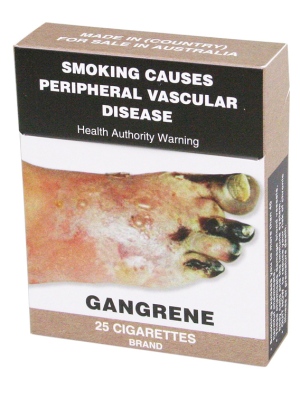
Nature discusses Australia's policy on cigarette pack design and notes that the effects of the new packs are anticipated to take effect across generations. Smoking among Australian teenagers is now the lowest it has ever been, thought to be the consequence of a full ban on tobacco advertising in 1992, more than ten years ahead of the UK. The article points out how the resistance of the tobacco industry suggests the new pack design is likely to be an added deterrent to smoking (presumably there will be a new market for old-style cigarette cases for hardened smokers).
Labels:
Advertising,
Compliance,
Health information
26 September 2011
Generic health charity press release
CELEBRITY! We are very happy to announce that [celebrity] is now our spokesperson/ambassador/patron! S/he is willing to be interviewed on the subject of [disease] which s/he had a “scare” about/has had/had a friend who had it/has always been worried about. As you know, s/he is in the news lately because of Big Brother/football spousal injunction/autobiography/launch of own vajazzaling range. S/he thinks that the current lack of awareness of [disease] is scandalous and is campaigning for more to be done!
Keen observation by GP and commentator on healthcare issues, Margaret McCartney.
[via Dorothy Bishop's Twitter stream]
Keen observation by GP and commentator on healthcare issues, Margaret McCartney.
[via Dorothy Bishop's Twitter stream]
Labels:
Health information,
Humour,
Information design
22 September 2011
Making the most of food expiration dates
Expired food buffet at Mediamatic. The secret of delicious use-by eating is, apparently, fresh herbs and toasted seeds. Not much time left for this sort of thing in the UK, given DEFRA's new guidelines.
Labels:
Health information
19 June 2011
Newspaper health advice
Ben Goldacre reports his analysis (with colleagues, Cooper, Lee and Sanders) of the accuracy of dietary advice in newspapers, taking a random sample of the content of newspapers published over a week. Of 111 health claims over the period, 62% were supported by evidence classified as 'insufficient', 10% were 'possible', 12% were 'probable', leaving only 15% in which the evidence was 'convincing'. There were fewer low quality claims ('insufficient' or 'possible') in broadsheets, but as Goldacre puts it, 'there wasn't much in it'.
Labels:
Health information,
Thinking methods
22 March 2011
Fooducate
Scans food bar codes and tells you what to watch out for (hidden fats or sugars), then suggests healthier alternatives. That's a lot of information to consider while you're actually shopping, unless you have a very leisurely approach, but ideal as you gaze at the breakfast cereal pack before your next purchase.
[via Tim O'Reilly]
29 January 2011
Better health an information problem?
Thomas Goetz at TEDMED, working from the premise that better health is an information problem rather than a science problem, shows design improvements to the standard test report forms (e.g. blood and PSA testing) that doctors receive. He claims that engaging patients with information in this kind of format can help them with the decisions and behaviour change they need to make to improve their health. There's no evidence for his claims, although also no doubt that the re-designs are an improvement on traditional forms.
In the course of his talk Goetz cites patient information re-design studies by Schwartz, Woloshin, and Welch and unreferenced dentistry research showing that fear does not motivate behaviour change in people's own dental care, whereas peoples' belief that they can make changes (efficacy) does. Goetz' claim is that information is the first step towards efficacy in health behaviour i.e. that thinking about patient engagement is more appropriate than trying to gain compliance.
06 October 2010
Design process and user participation
Balanced presentation by Axel Unger of IDEO Munich, on design process and its potential role in healthcare innovation. Gives a well-reasoned explanation of the processes user-centred designers use and encourages people commissioning design to 'design everything' i.e. think not just of the product but the context in which it's embedded (in service design speak 'the touch points'). I can't emphasise the importance of this enough. It also shows how IDEO involves end-users in design i.e. giving tools and supporting idea development, without making wild claims for participation and co-creation. Refreshing.
The talk includes PR videos of IDEO's work both with Mayo and Kaiser, both strong on user involvement and participation. Doctors from Mayo explaining that it's not the just the medical technology that's critical, but how it's implemented (pace the references to left and right brain!), and the Kaiser case study shows a participatory project to develop better processes for hand-overs including checklists and structured communication between medics and between medics and patients. IDEO claim that the Kaiser work has reduced both errors and the time nurses need to spend communicating with patients, and results in happier patients.
14 September 2010
Visualising anxiety
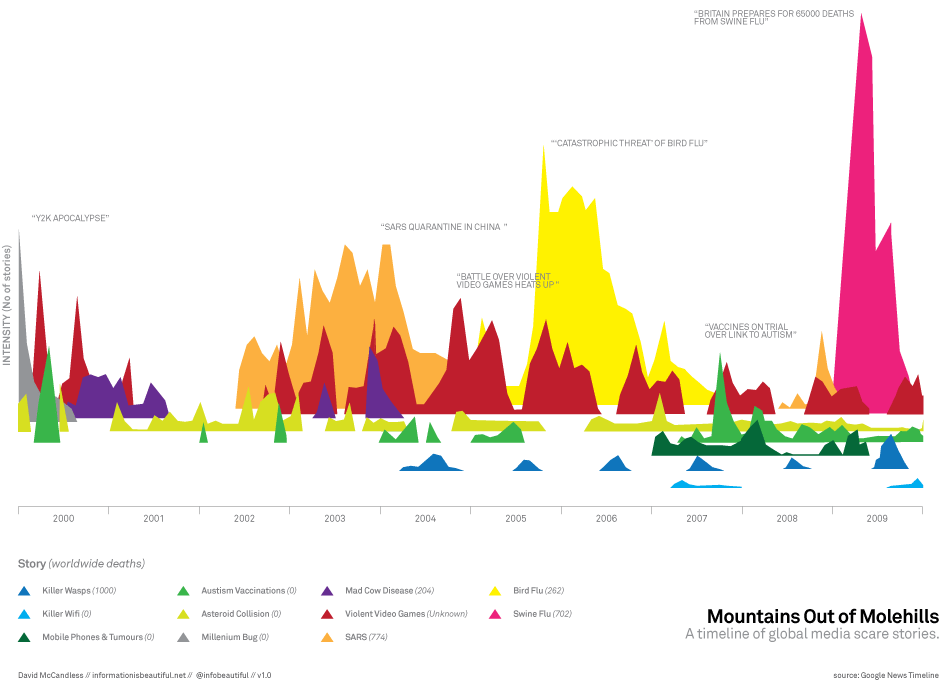
Mindhacks posted this timeline, published by Back, Kuffner and Egloff in Psychological Science, of emotions (sadness, anxiety and anger) expressed in Americans' pager messages on 9/11 2001. It seems to speak for itself and, probably unwittingly, fills in the gap in David McCandless' Mountains out of Molehills which maps media scare stories between 2000 and 2009, showing an apparent drop in stories when there were real, tangible fears in 2001-2. (McCandless discusses some of his visualisations at TED, here.)
Powerful as these visualisations are they leave me asking questions about their context: in the 9/11 case, what is the background level of emotion expression, without the stimulus of a calamity (the vertical scale in the diagram is huge); in the McCandless visualisation, again, I'd like more understanding of the vertical dimension; the relationship between level of fear and number of actual deaths (easily missed below the table) is also fascinating.
Hunter Whitney in UXMagazine briefly reviews the scope of data visualisation, his examples giving insight into the power, but also the potential for very individual interpretations, it brings.
Completely unvisualised, and also open to questions and interpretation I liked this comparison from The Paranoid Parents' Guide between American parents' top five fears about their children (on the basis of interviews) and the top five actual hazards (from accident data) children face:
Parents' fears Kidnapping, school snipers, terrorists, dangerous strangers, drugs
Actual hazards Car accidents, homicide (usually committed by a person who knows the child), abuse, suicide, drowning.
Some context for the recent, heated discussion in the UK regarding the safety of a seven-year-old crossing the road alone.
[Paranoid Parents' Guide from an NPR feature via Mindhacks]
07 September 2010
Walking meetings
This advice on how to hold walking meetings might be the strangest document TfL have put out.
[Thanks to Chris Heathcote for tweeting the link]
Labels:
Health information,
Thinking methods
16 August 2010
Involving patients in checklists
Since graduation season in June I've noticed links to commencement address transcripts (e.g. Jeff Bezos's brief but heartwarming address to the Princeton Baccalaureate, synopsis: 'OK, be clever, but also be kind, have a little humility').
On a different scale (but, actually, a related topic as, I suppose, all such addresses must be), Atul Gawande's address to Stanford medicine graduates considers the knowledge demands and ethical dilemmas doctors now face. He puts the increasing complexity of current medical decision-making into context:
When penicillin was discovered, in 1929, it suggested that treatment of disease could be simple—an injection that could miraculously cure a breathtaking range of infectious diseases. Maybe there’d be an injection for cancer and another one for heart disease. It made us believe that discovery was the only hard part. Execution would be easy.
[Bezos address via John Naughton]
On a different scale (but, actually, a related topic as, I suppose, all such addresses must be), Atul Gawande's address to Stanford medicine graduates considers the knowledge demands and ethical dilemmas doctors now face. He puts the increasing complexity of current medical decision-making into context:
When penicillin was discovered, in 1929, it suggested that treatment of disease could be simple—an injection that could miraculously cure a breathtaking range of infectious diseases. Maybe there’d be an injection for cancer and another one for heart disease. It made us believe that discovery was the only hard part. Execution would be easy.
To emphasise the difficulty of execution he cites examples of a medical procedure being overlooked in complex cases (administration of antibacterial vaccines after splenectomy), with dire consequences for patients. These are cases (and he alludes to others) where patients have complex conditions that are handled across different medical teams. So I suppose it is likely that the checklist approach that appears to reduce error in decision-making would be difficult to apply here. But, actually, Gawande has also written positively (in 2007) about the potential of checklists, for which he interviewed Peter Pronovost, who initiated their use in medical settings. Pronovost's comments reflect Gawande's train of thought at Stanford:
The fundamental problem with the quality of American medicine is that we’ve failed to view delivery of health care as a science. The tasks of medical science fall into three buckets. One is understanding disease biology. One is finding effective therapies. And one is insuring those therapies are delivered effectively. That third bucket has been almost totally ignored by research funders, government, and academia. It’s viewed as the art of medicine. That’s a mistake, a huge mistake. And from a taxpayer’s perspective it’s outrageous.
There's another resource here, too, the neglect of which might also be described as outrageous: the patient (if capable) or their family, the people who know the patient best and care about them most as a whole person, rather than a collection of medical problems. I'm not saying doctors don't care, and don't consult families but that families are not drawn on as a support to reduce medical error. There are shining examples of patient and family involvement in medical care, especially in non-acute settings such as childbirth, treatment of chronic illnesses etc. But if they had the right kind of empowerment and information, patients and their families, could also prevent omissions and error in acute settings.Medical dramas frequently portray interfering families who have to be rebuffed by inspired physicians who must make critical decisions that, in the end, win the day. That stereotype comes from somewhere.
My own limited experience, for example, has been that it's worthwhile checking a radiographer knows which side of your body they should be x-raying (there are worse stories, real, not apocryphal, of surgery carried out on the wrong side), that doctors are looking at your x-ray and not that of someone who shares your name, that doctors really have checked through any contra-indications of any drugs they might prescribe. I'm sure many people have similar errors or near-errors to report. In the power relations, even of a non-critical medical context, these can still be difficult things for a patient to feel comfortable about checking (although there's some encouragement to do so here). How much more pressure there is to assume (and, indeed, hope) the doctors haven't missed any details when things get critical: these are clinical procedures, the experts' exclusive domain...
...unless checklists become an open tool for communicating beyond the professional team and (back to Bezos) there's humility enough to embrace them.
[Bezos address via John Naughton]
21 April 2010
Design for behavioural change
This phrase 'designing to influence behaviour' has come up frequently in the past few weeks, so it's a coincidence (or maybe not) to see it occur Younghee Jung's blog in her discussion of health information projects in India.
19 April 2010
Triggering exercise behaviour change with information
Obesity Panacea reports research at University of Texas that signs positioned next to lifts in university buildings, telling people that using the stairs used up 5 times as many calories as taking the lift (with an arrow to hidden stairs), triggered significantly more stair walking than previously. The effect was sustained over a period of four weeks after the signs were removed. No social psychology involved (although perhaps some loss of face at using the lift?), just information. (Would have been good to know whether the behaviour transferred to other contexts.)
Obesity Panacea also refers to a UK study where painting coloured lines on paved playgrounds in children's schools increased levels of physical activity (at least for a month after the intervention was made).
[via NotExactlyRocketScience]
Obesity Panacea also refers to a UK study where painting coloured lines on paved playgrounds in children's schools increased levels of physical activity (at least for a month after the intervention was made).
[via NotExactlyRocketScience]
13 January 2010
You are how you eat
Innovative, because it gets at the heart of being overweight i.e. that you simply consume too much. And it trains you to adapt your basic behaviour, rather than become a fetishistic point or calorie counter.
And (joy) evidence of its effectiveness is published in the BMJ.
26 October 2009
The fun theory
Not new, but new to me. And if I may brag a little - I could once play (albeit much slower) the music used towards the end.
[via John Naughton]
Labels:
Compliance,
Health information,
Humour,
Innovation
15 October 2009
Social influence and changing hand-washing behaviour
BBC News reports a neat study by LSHTM where the influence of different types of messages on people's use of soap in handwashing was monitored unobtrusively in a motorway service station. Different classes of message, all containing the word 'soap', were presented on an LED display, visible as people entered the washroom (no visual information design beyond keeping the message length to 48 characters to fit the display).
Not suprisingly, baseline levels of soap use differed for men and women (erm, in case you're wondering, men less likely to wash their hands (or use soap) than women). More surprisingly men responded particularly well to disgust inducing messages, such as 'Don't take the loo with you - wash with soap'; whereas women responded better to messages that activated their existing knowledge, such as 'Water doesn't kill germs, soap does.' But both men and women responded well to messages that included an element of social influence, e.g. 'Is the person next to you washing with soap?' And, for men at least, the stronger messages worked better the more people there were in the washroom at the time of seeing the message. Yet another example of the potential for using social norms to influence behaviour (see also here and here).
Labels:
Compliance,
Green,
Health information
30 September 2009
Time taken to form a habit
Sweet little study by Philippa Lally, reported at PsyBlog, on the length of time it takes to form a habit. Common wisdom is that it's around 21 days (apparently this is the length of time amputees have been reported to get used to loss of a limb, according to one published surgeion). In fact habit formation can take far longer: ranging from 21 days for simple habits such as drinking a glass of water to become automatic, to up to 254 days for more demanding habits, such as doing 50 sit ups before breakfast; with a mean of 66 days. Length of time varies according to individuals, of course. Technology habits probably have a very short trajectory to automaticity, too.
[via Mindhacks]
[via Mindhacks]
17 September 2009
How governments influence people's behaviour
Radio 4 have aired a programme, Persuading us to be Good, on the failure of government attempts to improve our health, environmental and other behaviour. Apparently telling people there is 'an obesity crisis' or that 'millions are wasted on missed hospital appointments' has the undesired effect of encouraging people to believe that what they're doing is part of the norm. Messages telling you that changing your behaviour will be good for society, good for your children, or even good for you are less powerful than nudging you by telling you that other people have adopted a positive behaviour (see research comparing your energy consumption to others'). Other techniques such as 'choice architecture' (giving you the positive option first, leaving you to opt out for a less desirable choice), group commitment, public declaration of goals all help push us misguided individuals along the path to compliance.
Both the UK Labour and Conservative parties, facing various crises in office, or potentially so, have behavioural change gurus. For Labour, it's social psychologist Robert Cialdini, author of Influence: the Psychology of Persuasion; for the Tories, it's behavioural economist, Richard Thaler, co-author of Nudge: Improving Decisions About Health, Wealth and Happiness.
Sentiment towards psychologists seems very positively set in government circles, as least at the moment.
Both the UK Labour and Conservative parties, facing various crises in office, or potentially so, have behavioural change gurus. For Labour, it's social psychologist Robert Cialdini, author of Influence: the Psychology of Persuasion; for the Tories, it's behavioural economist, Richard Thaler, co-author of Nudge: Improving Decisions About Health, Wealth and Happiness.
Sentiment towards psychologists seems very positively set in government circles, as least at the moment.
Labels:
Compliance,
Green,
Health information,
Thinking methods
01 July 2009
The impact of making intentions public
Fascinating paper by Peter Gollwitzer and team on the impact on completion of a goal of making one's intentions public. Experiments with students who were required (or not) to state their career intentions publicly (e.g. becoming a lawyer or a psychologist) found that those who were highly committed to their goals were less likely to do activities leading to those goals (e.g. looking at relevant case studies) if they had made their intentions public (there was no significant effect for those who were not strongly committed to a goal). Gollwitzer suggests that 'giving social reality' to an intention also gives a false sense of completion, and so reduces activities to achieve the goal.
How then do we achieve things, given that we often make our intentions public? Indeed public commitment to a goal underlies StikK and other, more traditional, campaigns and services aimed at behaviour change (e.g. AA, slimming clubs and gyms). But of course, they don't always work, and the commercial services might well collapse if every member who made the initial commitment and joined then persisted and continued to use them.
Gollwitzer thinks the pressure to conform to others' expectations spurs us on and that making our public intentions specific e.g. 'I will achieve x by x point' should enhance that effect by giving a measure by which can be seen to achieve or fail. Certainly StikK uses this technique. And he suggests keeping up motivation by some subtle phrasing of goals to fix them as steps to an overall goal rather than the goal itself. Frankly some of that seems just a little too subtle.
But interesting to know of the role of social reality in the complex of influences that lead us to achieve things (or not).
[Via Boing Boing]
How then do we achieve things, given that we often make our intentions public? Indeed public commitment to a goal underlies StikK and other, more traditional, campaigns and services aimed at behaviour change (e.g. AA, slimming clubs and gyms). But of course, they don't always work, and the commercial services might well collapse if every member who made the initial commitment and joined then persisted and continued to use them.
Gollwitzer thinks the pressure to conform to others' expectations spurs us on and that making our public intentions specific e.g. 'I will achieve x by x point' should enhance that effect by giving a measure by which can be seen to achieve or fail. Certainly StikK uses this technique. And he suggests keeping up motivation by some subtle phrasing of goals to fix them as steps to an overall goal rather than the goal itself. Frankly some of that seems just a little too subtle.
But interesting to know of the role of social reality in the complex of influences that lead us to achieve things (or not).
[Via Boing Boing]
Subscribe to:
Posts (Atom)