Showing posts with label information appliances. Show all posts

15 November 2013

Nominet UK's top 100 social technology enterprises


An eclectic list, presented idiosyncratically (the tiled layout, amongst other things, limits each entry to four classification categories; if tile size is of significance that beats me). But an interesting few moments' browsing. Charlie Leadbeater's description of the selection process provides some useful background.

06 January 2012

Digital inequalities

John Naughton reports a NY Times article on wireless bandwidth consumption. Not surprisingly, 10% of users are consuming 90% of the bandwidth...and Finns consume 1 gigabyte of wireless data a month; 10 times the rest of Europe.

07 September 2011

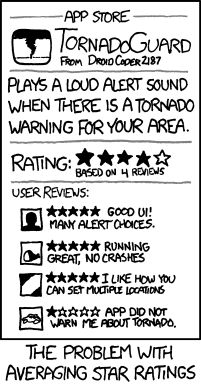
What makes a good app

Doing a bit of prep for a forthcoming postgraduate workshop on the design of weather forecasts, I found this typically incisive reflection on the design of apps by xkcd. So, yes, the functionality and interface are smooth but...

22 January 2011

Postal alerts on your phone


Arduino attachment to your letter box that sends you alerts when your post arrives. Now it just needs to learn to weed out real mail from the pizza and cable TV flyers that also come through the letter box. A weight detection add-on that only registers substantial material, maybe?

[via Engadget]

17 January 2011

Good fonts bad fonts

Several people have asked me about the research that provoked Jonah Lehrer's 'demonstration' (on Radio4's Today programme) of the apparent enhancement of memory for text content by 'poor' legibility (i.e. less than typical text fonts). Lehrer's thesis: making the brain work harder to read these fonts increases processing and hence memory. Eventually I read the Cognition article that spawned Lehrer's blog post and subsequent appearance on Today (where he did, rather unfortunately, seem to present the science as if it was his own). As far as one can tell the research is intrinsically well-designed (without really seeing the materials, one's at a bit of disadvantage) but the speculation about the locus of the effect (along the lines of Lehrer's) and the implications for education are surprising. In the discussion there was no consideration of whether the supposedly less legible fonts were actually less legible or just 'different' and hence more memorable. And in the discussion there was no mention of the impact of typeface on assessment of the ease or difficulty of a text (see Song and Schwartz's review of type legibility on information processing) which would, in the long run, affect the real usability of unusual text fonts.  It's a great undergraduate project but I feel Cognition's reviewers should have been a little more exacting.

Here's a summary of some of the comments I made when initially asked for reactions to the Lehrer interview:
- a shame that the BBC didn't think this merited inclusion of an additional point of view to Lehrer's, and indulged (probably encouraged) his bad science demo
- not surprising the Beeb picked up on the story because fonts are easy and fun to tweak in order to change document appearance, but document design is about so much more than just typeface choice (a lot should follow from that choice alone)
- shame the corpus of evidence that might provide an alternative perspective was only alluded to but not presented. One Today programme interview will likely influence many more than decades of scholarly texts and manuals
- Lehrer's initial example of 'easy' design that (in his view) led to poor information processing was reading in Arial on the Kindle. Not many text designers would recommend that as an approach to reading
- If you look at modern text book design (both the original article authors and Lehrer make much of the implications for designing text books) in fact all sorts of techniques of highlighting, illustrating etc. are used to make elements of text more distinctive and memorable. And, historically, designers have used the less legible italic version of fonts to make small elements of text more obvious and memorable
- 'reading' covers many activities, not just reading to memorise: browsing, searching, quoting, referring back etc.
- if the researchers had looked at text in, say, shocking pink they might have found a similar effect (a shame they didn't do this, actually, since it would have added another, helpful, dimension to the research). Would they have then recommended that books were all printed in colour?


All this aside, looking at the type of text teenagers many learn and revise from now (maybe the typical Princeton entrant didn't), it's clear book designers have got there first.

07 September 2010

Microsoft's Hohm, user reviewed


Ars Technica has a detailed review of the installation and use of Hohm domestic power monitor (more info and photos also at CNET). The system monitors electricity consumption using a retro-fit meter (fitting the meter, see CNET photo, above, not for the faint-hearted) and real time display. It can also take in gas consumption figures, direct from the household gas supplier, to the associated web application (again, quite a complicated set up process).

Some interesting conclusions: for this reviewer, using the real time display was more appealing than the analytics available on the web (although, since that shows gas consumption, it's likely to provide the greatest opportunity for considering savings). The display had some interesting functionality for rapid feedback: being able to 'zero' the background power consumption, then see the difference when a new appliance is connected; the capacity to show consumption as cost per hour, and to project a monthly bill, rather than KWh. Saving money seemed to be the key motivator for the reviewer, and I suspect for the majority of users (lovely account of reviewer's friend using a fuel monitor in his car and altering his driving behaviour to 'beat' his previous consumption - monitoring to that extent may not be great for safe driver performance).

What strikes me about this and other reviews is their focus on the novel experience rather than the embedded experience of monitoring consumption over time.  Rob Waller commented recently on stopping looking at his domestic monitor after week 3. We may have products, but not yet, perhaps, a durable consumer experience.

26 August 2010

Focus in lifelogging and blogging

I recently read Sellen and Whittaker's excellent review of Lifelogging studies. Their key point is that, so far, prototypes haven't capitalised on what we know of how human memory works, for example
- that we store partial, associatively organised memories of events, rather than total, chronological  capture- that although we want to recall things, we also want to reminisce, and reflect on our memories
- and that one of our challenges is not remembering things from the past, but remembering to do things in the future.
Some interesting details emerge (for example, Gregory Abowd's finding that lecture recordings don't significantly improve students' grades; that whereas trials show meeting recording is popular with participants, it has never caught on as a business tool).

Sellen and Whittaker make the distinction between passive 'lifelogging' and active 'blogging' in which we choose what aspects of our lives to record, one of which is, apparently, food. TechCrunch post on recent funding for food blogging service, Foodspotting, commenting 'Don’t even bother arguing about it. It’s just the way it is'.

And so it would seem: in yesterday's Guardian Martin Parr was encouraging readers to photograph their food:
"When you are away, why not record all of the food that you eat? If someone has spent a lot of time cooking a meal, or if you're going out for a treat, photograph the food. You could make a series of each breakfast, lunch and dinner that you ate. That would be fascinating."

Indeed.

13 January 2010

You are how you eat

TechReview have published a roundup of gadgets for getting in shape: a range of clever devices for monitoring your calorie consumption or activity levels. The Mandometer (above) seems an interesting departure, though. It measures the rate at which you're eating and compares that to the rate that would give you the natural satiety cues that regulate eating behaviour in people of normal weight (i.e. the rate that would give time for the stomach to tell the brain it's getting full). Your task as a user is to try to get your rate down to normal.

Innovative, because it gets at the heart of being overweight i.e. that you simply consume too much. And it trains you to adapt your basic behaviour, rather than become a fetishistic point or calorie counter.

And (joy) evidence of its effectiveness is published in the BMJ.

08 September 2009

Mobile web in learning

Round up post on Putting People First of articles on the role of mobile phones in learning, mostly, but not exclusively, in developing countries. The lead article, by Abjihit Kadle, on mobile learning in India makes the point that as devices converge, so will e-learning and m-learning.

26 February 2009

How people really use the iPhone

An interesting presentation by Bill Westerman of Create With Context, shows people's detailed interactions with their iPhone and reveals how much interaction is actually learned, rather than being immediately intuitive. One of his recommendations is that the multi-touch interaction is not the sole route to access functionality: in some cases people didn't know it was an option, others found it conceptually difficult and some didn't have the dexterity to manage it.

One of the tasks Westerman asked his participants to carry out, choosing a new application from the Appstore, revealed how influential the icon associated with the application was: the cleaner and crisper, the more credible the application. This may be specific to iPhone-style interfaces where icons are so significant to the interaction. People were sceptical of star ratings and reviews of applications, preferring to trust friends' recommendations, and they were suspicious that cheap apps might be malware.

This study was conducted with 30-55 year-olds since, in Westerman's opinion, they have the cash to indulge themselves and are not over the IT hill yet. Thank you!

14 February 2009

Voice enhanced digital ink


Livescribe's Pulse smart pen not only transfers your written notes direct to computer but also includes a microphone so you can record a simultaneous sound stream.

Via Status-Q

27 January 2009

E-paper emergency signs

Currently under trial in Tokyo. Via Engadget.

30 November 2008

Satnavs and human behaviour

This weekends' FT Magazine includes an article on the impact of satnav devices (apparently in the UK 35% of vehicles have either built in or portable satnavs, more than anywhere else in Europe, more even than the 33% in Japan). The article includes some incredible (literally) reports of peoples' dogged adherence to their satnav's instructions, even when it leads them on to a level crossing or through an impassable ford.

The FT asks why people ignore external cues (signs saying a ford is too deep, the look and feel of a level crossing gate) to follow their satnav's instructions (especially when drivers are so ready to dispute navigators' instructions). Tom Stewart of Systems Concepts comments that people become fixed in a pattern of behaviour, following the satnav's instructions to extremes; he makes a parallel with people's use of calculators for simple sums. There may be something in this but I also think there is an element of drivers over-estimating their safety once cocooned in their cars, similar to the (not undisputed) effect wearing seatbelts has on the safety of drivers' behaviour.

05 June 2008

ROI from user-focus

Yet more data on the revenue lost from return of fault-free consumer electronics goods. This time from Accenture, who estimate the cost to the US CE industry in 2007 was $17 billion.

10 April 2008

Intelligent and reusable Post-its


I like this idea, yet to become a commercial product.

15 May 2006

Another stereotype shattered

According to research by Emap reported in today's Guardian, more women are buying music downloads than men. This reverses the early trend in music downloads when the market was mainly young men, downloading for listening on their PCs. Now MP3 players have made downloads useful to people who use their computers to do things, rather than simply do things on their computers.

According to the research downloads are particularly popular with women because they can sample music and make their selections without having to face the machismo of the male assistants in music shops.

03 May 2006

Tracking and mapping

Upbeat article in USA Today on how aggregated location data from cell phones could be used inform solutions to urban congestion problems. Also examples of how phones could receive location-based information to help in everyday tasks such as
- finding parking spaces (or avoid full car parks)
- hailing taxis
- finding new meeting location, when meeting venue is changed at last minute.

On a more emotive note Christian Nold has created aggregated mappings of people's galvanic skin response (GSR) in different locations (GSR is an easily measurable indicator of people's emotional arousal, but doesn't explain the nature of the arousal). Some maps are easier to interpret than others, like the peak in emotional arousal at a busy road junction in Greenwich. (Via Mindhacks)

06 April 2006

Current information


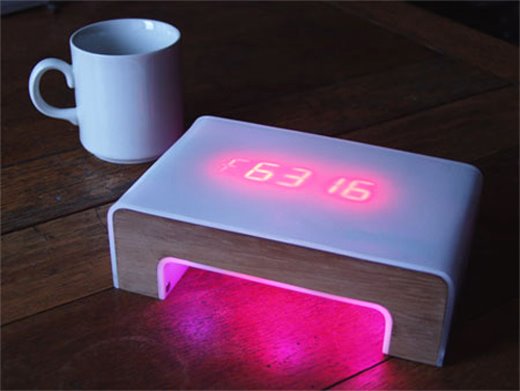
This is just the sort of product I was thinking about when talking about the need for meaningful metering, close to the point of use. It's called a Wattson and is the first product developed by DIY Kyoto with funding from NESTA.

I hope this is the sort of approach John Prescott had in mind when he announced budget money for development of smart metering.