Showing posts with label Compliance. Show all posts
Showing posts with label Compliance. Show all posts
21 November 2011
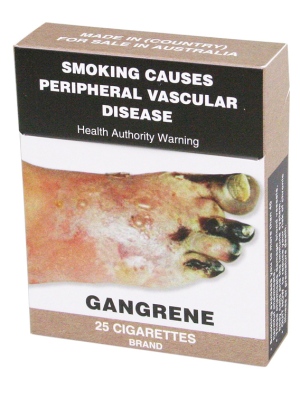
Long term impacts of cigarette pack design

31 October 2011
Dynamic passenger WIFI

Tokyo commuters will now have access to local WiFi entertainment and information on their journeys, including being able to see carriage crowding and temperature along their train. It will be interesting to see the impact of that information on passenger behaviour. Would you sacrifice pole position for the platform exit (London Underground passengers bunch up in specific carriages in order to get off the system as quickly as possible) for a cooler carriage?
[From FuelforThoughts via Chris Heathcote]
19 September 2011
Changing littering behaviour
People driving along the M40 this summer will probably have seen signs nudging them to dispose of their litter responsibly, with a little social pressure 'Bin your litter, other people do'. The Highways Agency, which is trialling various approaches to reducing littering, has probably picked up one or two negative responses. Seeing the signs I've wondered whether they might precipitate, rather than reduce, littering. Sadly, there seems to be some evidence for just such an effect: research at University of Groningen has found that prohibition signs in settings where there are cues to the negative behaviour (e.g. litter on the road) induce rather than reduce violations. This and other research on the social influences on behaviour in a special edition of Group Processes and Intergroup Relations.
[via BPS Research Digest]
[via BPS Research Digest]
29 January 2011
Better health an information problem?
Thomas Goetz at TEDMED, working from the premise that better health is an information problem rather than a science problem, shows design improvements to the standard test report forms (e.g. blood and PSA testing) that doctors receive. He claims that engaging patients with information in this kind of format can help them with the decisions and behaviour change they need to make to improve their health. There's no evidence for his claims, although also no doubt that the re-designs are an improvement on traditional forms.
In the course of his talk Goetz cites patient information re-design studies by Schwartz, Woloshin, and Welch and unreferenced dentistry research showing that fear does not motivate behaviour change in people's own dental care, whereas peoples' belief that they can make changes (efficacy) does. Goetz' claim is that information is the first step towards efficacy in health behaviour i.e. that thinking about patient engagement is more appropriate than trying to gain compliance.
07 January 2011
The psychology of climate change communication

[via NotExactlyRocketScience]
08 December 2010
Peer influence and behaviour change - a wrinkle
The idea that people's motivation to change their behaviour (e.g. in energy consumption) will be boosted by knowing norms for others similar to them gets a bit of a knock from research on electricity consumption in California. Dora Costa and Matthew Kahn have found that while nudging people with norm data reduces consumption by roughly 2 per cent, this isn't evenly distributed across households. It varies according to political leanings: homeowners who identified themselves as Republicans cut consumption by only 0.4 per cent. And those Republicans with no interest in environmental causes increased electricity use by 0.75 per cent.
Clearly one nudge doesn't fit all.
[via PuttingPeopleFirst]
Clearly one nudge doesn't fit all.
[via PuttingPeopleFirst]
20 September 2010
07 September 2010
Trust in web sites
Technology Review summarises some research looking at factors that encourage people to divulge personal information on web sites. It's a mixed picture, with research by Alessandro Acquisti at CMU suggesting that the more formal a web site appears, the less likely people are to give personal information. Joseph Bonneau at Cambridge has found that sites that bury privacy settings (i.e. keeping it off users' minds) are likely to get more information from their users (coincidentally, this research was published just as Facebook increased the complexity of its security settings). Tangentially, Soren Preibusch, also at Cambridge, has found that sites which appear to give a high level of privacy can sell products at a higher price than those that don't.
08 July 2010
Smart meters are not enough
American research suggests that fitting homes with smart metering devices isn't enough to help people reduce energy consumption effectively. Understanding patterns of energy use is also required. The American Council for Energy-Efficient Economy said: "To realize potential feedback-induced savings, advanced meters must be used in conjunction with in-home (or online) displays and well-designed programs that successfully inform, engage, empower, and motivate people."
Reported by CNET, which has a nice (though not comprehensive) slide show of current home metering devices.
[via Putting People First]
Reported by CNET, which has a nice (though not comprehensive) slide show of current home metering devices.
[via Putting People First]
15 June 2010
The freedoms and motivations of personal projects
Engaging presentation by Ji Lee, now of Google creative labs, on how his frustration with the constraints of working in a corporate environment propelled him into his own personal project, The Bubble Project, which spread virally, so launching (or re-launching) his career.
(Have enclosed this particular version, from an RSA conference, just to irritate myself a little as the talk is accompanied by real-time scribing which, imo, and remembering a research review I carried out many years ago for Independent Television Commission, detracts from the content more than it adds to the story.)
Pink's bottom line for gaining commitment to complex, creative tasks is to give enough financial incentive to take money away as an issue, then give autonomy, mastery and purpose. There is I'm sure much in what he says (as evidence he cites examples such as the success of 'unmanaged' and unincentivised Wikipedia compared to Microsoft's managed and incentivised Encarta) but I worry about too direct an extrapolation from social science studies and the reduction of managing complex social settings to a mantra-like prescription. The companies that foster autonomy, mastery and purpose give so much besides in terms of intrinsically interesting tasks, working environments, recognition of individuals etc. etc. All that said, they don't seem a bad starting point for developing employees.
[Both via Ben Ackles]
Ji Lee: The Transformative Power of Personal Projects from 99% on Vimeo.
On a related theme but perhaps less engaging, one of many presentations by Daniel Pink, based largely on the work of Daniel Ariely and other social and behavioural economists on what motivates performance in complex, cognitive tasks. The critical word here is 'performance'. Money incentives tend to motivate effort, but not necessarily resultant performance. They can, in fact, 'choke' performance, as can other pressures.(Have enclosed this particular version, from an RSA conference, just to irritate myself a little as the talk is accompanied by real-time scribing which, imo, and remembering a research review I carried out many years ago for Independent Television Commission, detracts from the content more than it adds to the story.)
Pink's bottom line for gaining commitment to complex, creative tasks is to give enough financial incentive to take money away as an issue, then give autonomy, mastery and purpose. There is I'm sure much in what he says (as evidence he cites examples such as the success of 'unmanaged' and unincentivised Wikipedia compared to Microsoft's managed and incentivised Encarta) but I worry about too direct an extrapolation from social science studies and the reduction of managing complex social settings to a mantra-like prescription. The companies that foster autonomy, mastery and purpose give so much besides in terms of intrinsically interesting tasks, working environments, recognition of individuals etc. etc. All that said, they don't seem a bad starting point for developing employees.
[Both via Ben Ackles]
11 June 2010
Consumer understanding of smart metering
Interesting report by Foolproof, albeit on the basis of two focus groups, but with some well-designed stimulus materials, on attitudes to energy use and future smart metering. Participants' reactions to a future scenario where energy would both be more expensive, and its supply subject to interruption were interesting:
"The resounding reaction to this was incredulity:
“Preposterous, they wouldn’t let that happen”.
“There would be riots in the street”.
It took us some time to even get the groups to consider the proposition seriously."
[via Usability News]
"The resounding reaction to this was incredulity:
“Preposterous, they wouldn’t let that happen”.
“There would be riots in the street”.
It took us some time to even get the groups to consider the proposition seriously."
[via Usability News]
21 April 2010
Design for behavioural change

This phrase 'designing to influence behaviour' has come up frequently in the past few weeks, so it's a coincidence (or maybe not) to see it occur Younghee Jung's blog in her discussion of health information projects in India.
19 April 2010
Triggering exercise behaviour change with information
Obesity Panacea reports research at University of Texas that signs positioned next to lifts in university buildings, telling people that using the stairs used up 5 times as many calories as taking the lift (with an arrow to hidden stairs), triggered significantly more stair walking than previously. The effect was sustained over a period of four weeks after the signs were removed. No social psychology involved (although perhaps some loss of face at using the lift?), just information. (Would have been good to know whether the behaviour transferred to other contexts.)
Obesity Panacea also refers to a UK study where painting coloured lines on paved playgrounds in children's schools increased levels of physical activity (at least for a month after the intervention was made).
[via NotExactlyRocketScience]
Obesity Panacea also refers to a UK study where painting coloured lines on paved playgrounds in children's schools increased levels of physical activity (at least for a month after the intervention was made).
[via NotExactlyRocketScience]
04 March 2010
The influence of touch
Mind Hacks links to a NY Times review of research showing how touch influences social interactions: for example, a light touch by a doctor on a patient's arm increases the patient's perception of the length of a consultation, or the likelihood of their taking drugs compliantly; sports teams that have more physical contact between members appear to perform better than those that have less.
An interpretation is offered: touch indicates a shared enterprise, shared responsibility. I wonder. When I'm feeling particularly English and spikey touch from a person with whom I have no particular social bond can seem quite inappropriate and intrusive. The NYT results come from North America. Would they apply in northern Europe?
An interpretation is offered: touch indicates a shared enterprise, shared responsibility. I wonder. When I'm feeling particularly English and spikey touch from a person with whom I have no particular social bond can seem quite inappropriate and intrusive. The NYT results come from North America. Would they apply in northern Europe?
26 October 2009
The fun theory
Not new, but new to me. And if I may brag a little - I could once play (albeit much slower) the music used towards the end.
[via John Naughton]
15 October 2009
Social influence and changing hand-washing behaviour
BBC News reports a neat study by LSHTM where the influence of different types of messages on people's use of soap in handwashing was monitored unobtrusively in a motorway service station. Different classes of message, all containing the word 'soap', were presented on an LED display, visible as people entered the washroom (no visual information design beyond keeping the message length to 48 characters to fit the display).
Not suprisingly, baseline levels of soap use differed for men and women (erm, in case you're wondering, men less likely to wash their hands (or use soap) than women). More surprisingly men responded particularly well to disgust inducing messages, such as 'Don't take the loo with you - wash with soap'; whereas women responded better to messages that activated their existing knowledge, such as 'Water doesn't kill germs, soap does.' But both men and women responded well to messages that included an element of social influence, e.g. 'Is the person next to you washing with soap?' And, for men at least, the stronger messages worked better the more people there were in the washroom at the time of seeing the message. Yet another example of the potential for using social norms to influence behaviour (see also here and here).
Not suprisingly, baseline levels of soap use differed for men and women (erm, in case you're wondering, men less likely to wash their hands (or use soap) than women). More surprisingly men responded particularly well to disgust inducing messages, such as 'Don't take the loo with you - wash with soap'; whereas women responded better to messages that activated their existing knowledge, such as 'Water doesn't kill germs, soap does.' But both men and women responded well to messages that included an element of social influence, e.g. 'Is the person next to you washing with soap?' And, for men at least, the stronger messages worked better the more people there were in the washroom at the time of seeing the message. Yet another example of the potential for using social norms to influence behaviour (see also here and here).
30 September 2009
Time taken to form a habit
Sweet little study by Philippa Lally, reported at PsyBlog, on the length of time it takes to form a habit. Common wisdom is that it's around 21 days (apparently this is the length of time amputees have been reported to get used to loss of a limb, according to one published surgeion). In fact habit formation can take far longer: ranging from 21 days for simple habits such as drinking a glass of water to become automatic, to up to 254 days for more demanding habits, such as doing 50 sit ups before breakfast; with a mean of 66 days. Length of time varies according to individuals, of course. Technology habits probably have a very short trajectory to automaticity, too.
[via Mindhacks]
[via Mindhacks]
17 September 2009
How governments influence people's behaviour
Radio 4 have aired a programme, Persuading us to be Good, on the failure of government attempts to improve our health, environmental and other behaviour. Apparently telling people there is 'an obesity crisis' or that 'millions are wasted on missed hospital appointments' has the undesired effect of encouraging people to believe that what they're doing is part of the norm. Messages telling you that changing your behaviour will be good for society, good for your children, or even good for you are less powerful than nudging you by telling you that other people have adopted a positive behaviour (see research comparing your energy consumption to others'). Other techniques such as 'choice architecture' (giving you the positive option first, leaving you to opt out for a less desirable choice), group commitment, public declaration of goals all help push us misguided individuals along the path to compliance.
Both the UK Labour and Conservative parties, facing various crises in office, or potentially so, have behavioural change gurus. For Labour, it's social psychologist Robert Cialdini, author of Influence: the Psychology of Persuasion; for the Tories, it's behavioural economist, Richard Thaler, co-author of Nudge: Improving Decisions About Health, Wealth and Happiness.
Sentiment towards psychologists seems very positively set in government circles, as least at the moment.
Both the UK Labour and Conservative parties, facing various crises in office, or potentially so, have behavioural change gurus. For Labour, it's social psychologist Robert Cialdini, author of Influence: the Psychology of Persuasion; for the Tories, it's behavioural economist, Richard Thaler, co-author of Nudge: Improving Decisions About Health, Wealth and Happiness.
Sentiment towards psychologists seems very positively set in government circles, as least at the moment.
31 July 2009
Everyday memory enhancement techniques
Boing Boing reports research showing that carrying out an additional motor task (such as patting the head) helps older people remember that they have carried out routines such as taking their daily medication. Enriching mental processing at the time of the task reduces duplication errors because people have forgotten completing the task initially. Comments on Boing Boing reveal the many similar techniques relatively young (presumably) people use to remember actions such as locking their front door.
01 July 2009
Motivation reduces as number of competitors increases
Subscribe to:
Posts (Atom)

 Posts
Posts

